
Fruit and vegetable pieces need controlled preparation before drying. Cut size, skin and seed handling, sugar or acid content, and pre-freezing conditions all affect the finished structure, color and rehydration behavior. The line is designed from the piece you want to sell, not from a generic dryer.
Pain points we solve
Browning and color lossFreezing and drying conditions are set to the sugar and acid profile so the finished color is repeatable.
Sticking and collapseHigh-sugar fruit can collapse or stick during drying; the cycle and fill depth are matched to the material.
Poor rehydrationIce structure set at freezing shapes the pores that make rehydration work.
Preparation wasteCutting and sorting are sized to the dryer so peel, seed and trim losses are controlled.
Key material questions
- Piece size, shape and fill depth.
- Initial moisture and sugar or acid content.
- Color, texture and rehydration targets.
- Allergen and hygiene requirements.
Suggested process flow
Wash and sort → cut or slice → pre-freeze → vacuum freeze dry → inspect and size → package with a moisture barrier. The exact sequence and equipment depend on the material and the cut size.
Related equipment
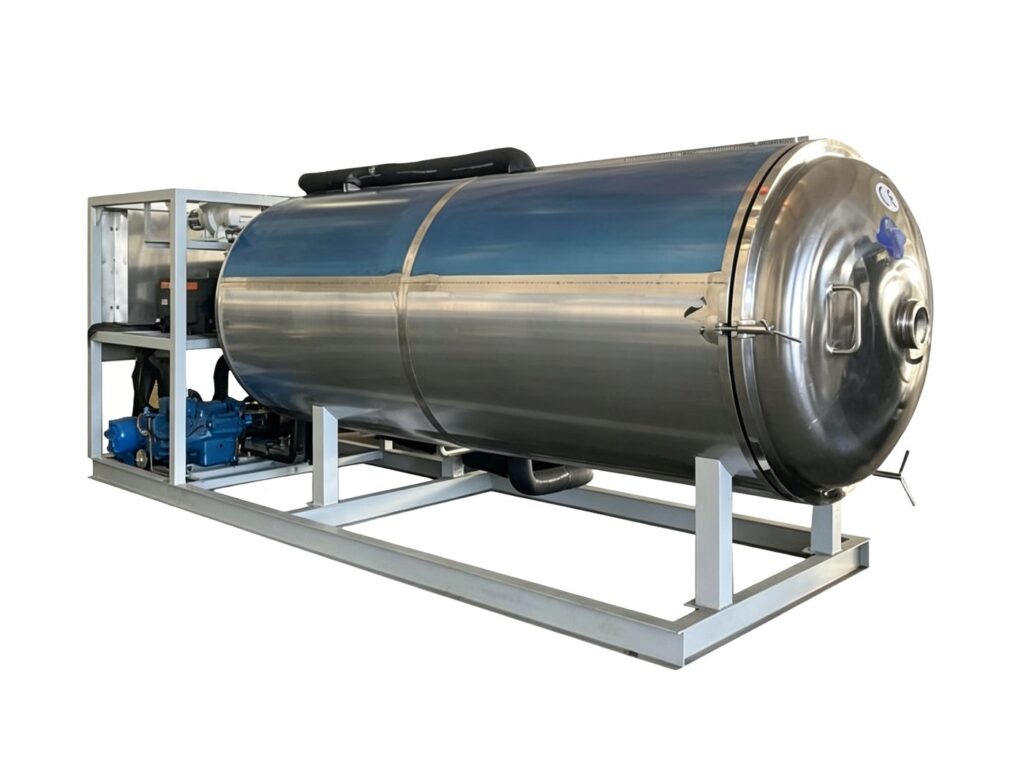
Structured fruit and vegetable pieces connect preparation and pre-freezing with an industrial freeze dryer and moisture-protective packaging.
Related guidance
- Freeze drying vs hot-air drying — when structure and rehydration matter.
- Collapse and glass transition — the temperature limit for high-sugar fruit.